.svg)
Other news
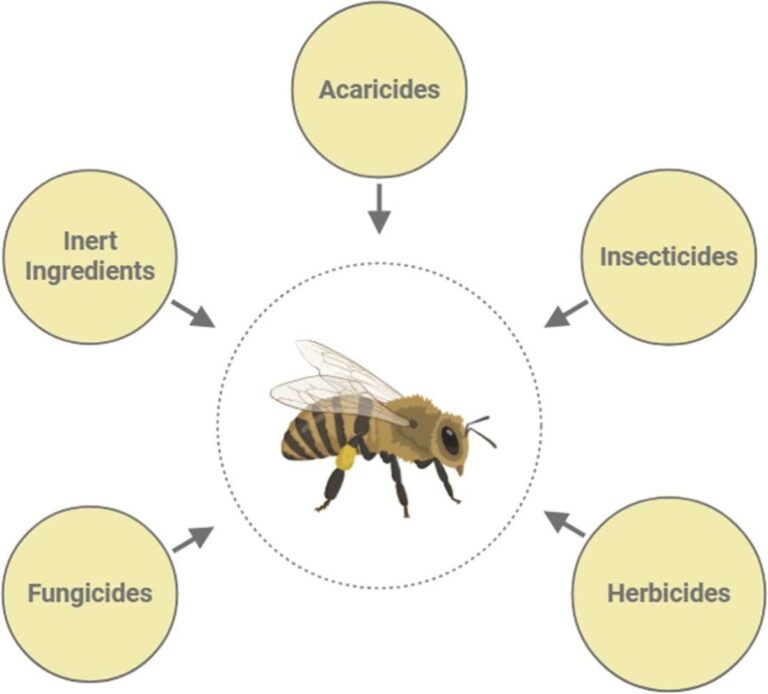
Pesticide contamination in apicultural products
Honeybees and bee products, such as honey, royal jelly, propolis, pollen, and others, are often found to contain residues of different types of pesticides, including insecticides, acaricides (against varroa mite), fungicides, and herbicides. Bees are exposed either through direct veterinary treatment or by interactions with the environment. Monitoring bees and bee products is thus important both in view of food safety and environmental monitoring. In the review paper, we analysed literature published between 2019 and 2024 and conducted a relational co-occurrence analysis. Our study identified the gaps of the monitored matrices and calls for standardized quality control and reporting practices. The work was partially supported by the ARIS grant J7–50040.
The paper was published in the journal Trends in Environmental Analytical Chemistry https://www.sciencedirect.com/science/article/pii/S221415882600005X#spnsr1
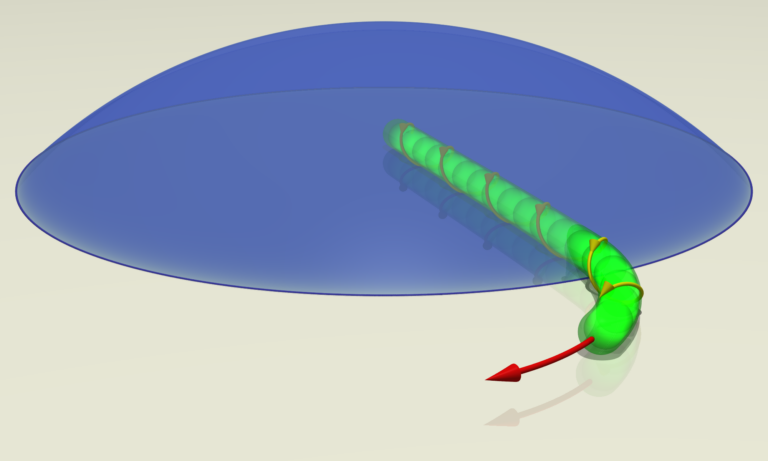
Article in PNAS
Cyanobacteria, also known as blue-green algae, are among the most significant life forms in our planet's history. They caused the formation of an oxygen atmosphere, which enabled the evolution of more complex organisms. Filamentous cyanobacteria can glide on surfaces and react to changes in environmental conditions by reversing their gliding direction. In the new study, we investigated a novel navigation mechanism whereby the filaments move straight through water, but bend and turn to the right on dry substrate. We developed a theoretical model that established a connection between helicity of the gliding motion and the curvature of the track. This research was conducted in collaboration with the experimental group of Dr. Vahid Nasirimarekani at the Max Planck Institute for Dynamics and Self-Organization (MPIDS) in Göttingen, Germany.
Published in: A. Vilfan, L. Abbaspour, S. Villa in V. Nasirimarekani, "Chiral gliding: Right-handed navigation of filamentous cyanobacteria", Proc. Natl. Acad. Sci. U.S.A. 123: e2534547123 (2026), https://doi.org/10.1073/pnas.2534547123