.svg)
Other news
Article in Nature Communications
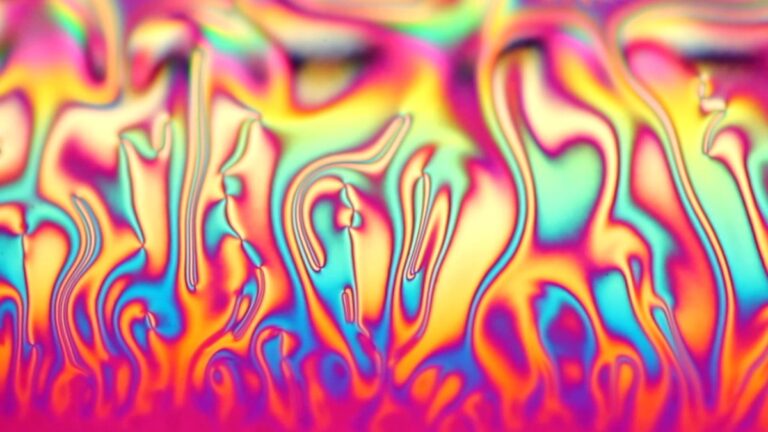
Turbulent flows in active nematic liquid crystals lead to spontaneous topological defect creation. Researchers Maruša Mur, Žiga Kos, Miha Ravnik and Igor Muševič from the Department of Condensed Matter Physics at the Jožef Stefan Institute and Faculty of Mathematics and Physics at the University of Ljubljana have published a paper in Nature Communications, titled Continuous generation of topological defects in a passively driven nematic liquid crystal, where they study a similar behavior in a passively driven system. Here, the flow is driven by a concentration gradient of small organic molecules added into a thin film of a nematic liquid crystal. Counter-rotating vortex rolls are generated in the film. Above a velocity threshold the flow transitions from a laminar into a turbulent regime, where topological defects start forming continuously. In the paper authors support their experimental findings by numerical simulations. The work describes one of the few mechanisms of topological defect creation in soft matter.
Article in Sustainable Energy Fuels
Assistant Professor Anton Gradišek, PhD from the Department of Condensed Matter Physics F5 and colleagues from Australia have published in Sustainable Energy Fuels the article Hydrated lithium nido-boranes for solid–liquid hybrid batteries.
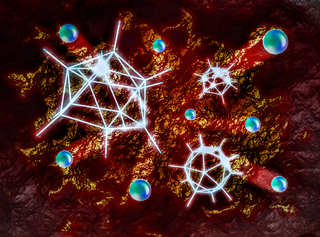
Hydridoborate salts are considered as promising solid-state electrolyte candidates for the development of solid-state batteries (SSBs). The presence of coordinated water in the crystal structure may facilitate the migration of the cation, yielding compounds with high ionic conductivity. In the present study, two samples of hydrated LiB11H14, here called LiB11H14·2H2O and a-LiB11H14·(H2O)n (n < 2), demonstrate remarkably different properties as solid-state electrolytes. Using a series of analytical methods, we studied these two materials as possible candidates for solid-liquid hybrid batteries.