.svg)
News
Strokovni komentar v reviji Nature Materials
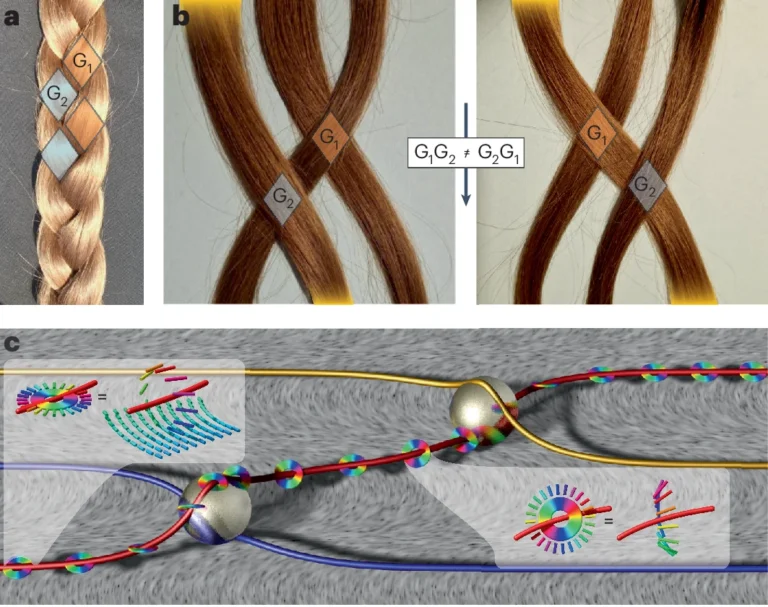
Uroš Tkalec z Odseka za fiziko trdne snovi Instituta »Jožef Stefan« in Simon Čopar s Fakultete za matematiko in fiziko Univerze v Ljubljani sta v reviji Nature Materials objavila strokovni komentar »Weaving braids of defect lines«. Prispevek v rubriki News & Views osvetljuje napredek pri programabilnem prepletanju topoloških defektov v tekočih kristalih.
V obravnavani raziskavi so Chenhui Peng in sodelavci s pomočjo svetlobe in koloidnih delcev oblikovali mreže prepletenih defektnih linij v nematskem tekočem kristalu. Orientacijska struktura tekočega kristala okoli teh linij nosi informacijo, opisano s t.i. nematskimi biti. Podobno kot pri pletenju kit je rezultat zaporednih križanj odvisen od vrstnega reda, kar je značilnost neabelskih operacij. S premikanjem delcev je mogoče zaporedje operacij preurediti in mrežo ponovno programirati, spremembe prepletov pa neposredno spremljati pod mikroskopom. Avtorja komentarja poudarita prehod od ustvarjanja posameznih vozlov in spletov k načrtovanju mrež, ki izvedejo vnaprej določene transformacije nematskih bitov. Takšen pristop povezuje fiziko mehke snovi s topološkim procesiranjem informacij v klasičnem sistemu pri sobni temperaturi in je v določeni meri nadgradnja domačega članka v reviji Science iz leta 2011.
Več o prispevku: https://www.nature.com/articles/s41563-026-02741-0
Članek v reviji Building and Environment
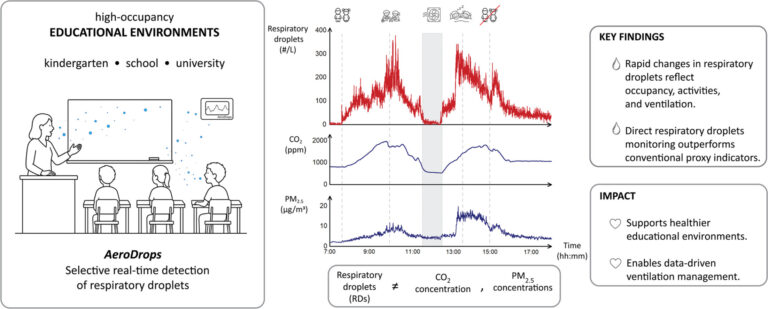
Anja Pogačnik Krajnc, Matjaž Malok in Maja Remškar so v sodelovanju z Marjetko Conradi z Inštituta za kovinske materiale in tehnologije, Ljubljana ter Melito Tramšek in Markom Jeranom z Oddelka za anorgansko kemijo in tehnologijo (K1) v reviji »Building and Environment« objavili članek z naslovom »Selective real-time monitoring of respiratory droplets for indoor air safety in educational environments«
Respiratorne nalezljive bolezni v vrtcih in šolah se širijo predvsem preko drobnih izdihanih ali izkašljanih kapljic sline. Z detektorjem AeroDrops, ki je bil razvit na IJS, smo v realnem času izmerili koncentracijo respiratornih kapljic v vrtcu, učilnici osnovne šole, univerzitetni predavalnici in v laboratoriju eksperimentalne kemije. Detektor je štel respiratorne kapljice selektivno, hkrati pa ostal neobčutljiv na delce, ki predstavljajo večino aerosolov. Časovne spremembe koncentracij kapljic so odražale vpliv dejavnosti udeležencev, stopnjo zasedenosti, govorjenja in gibanja. Rezultati kažejo, da selektivno spremljanje respiratornih kapljic v realnem času prinaša nov pristop za oceno kvalitete zraka v notranjih prostorih in omogoča upravljanje prezračevanja, ki se odziva na dejansko izpostavljenost potencialni okužbi.
Članek je na povezavi: https://doi.org/10.1016/j.buildenv.2026.115281
Nova objava: Z MXeni izboljšane piezoelektrične polimerne folije za fleksibilno elektroniko
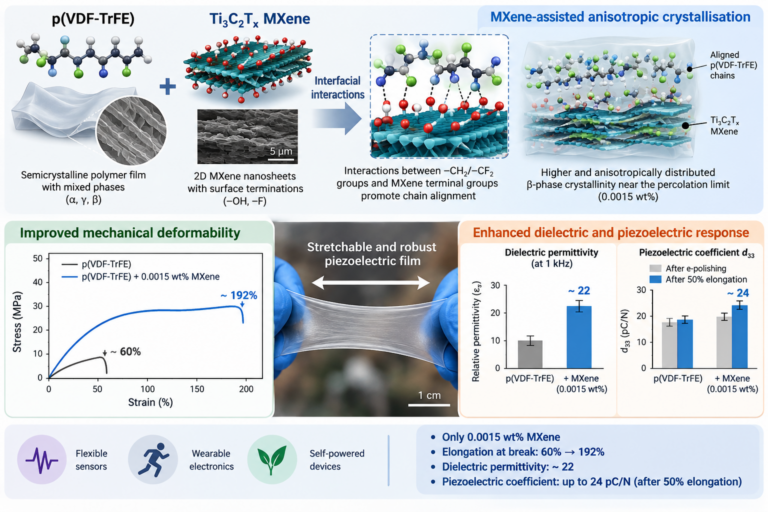
V naši najnovejši raziskavi, objavljeni v znanstveni reviji Polymers, smo pokazali, kako lahko že izjemno majhne količine dvodimenzionalnih MXene nanoplasti bistveno izboljšajo mehansko raztegljivost in piezoelektrične lastnosti polimernih folij. Rezultati odpirajo nove možnosti za razvoj fleksibilnih senzorjev, nosljive elektronike in naprav za pridobivanje električne energije iz mehanskih deformacij.
V raziskavi smo proučevali vpliv Ti₃C₂Tₓ MXene nanoplasti na strukturo in funkcionalne lastnosti polimernih folij iz poli(viniliden fluorid-trifluoroetilena), pripravljenih s sintezo iz raztopine in naknadno toplotno obdelavo. Ugotovili smo, da interakcije med površino MXene nanoplasti in polimernimi verigami spodbujajo njihovo usmerjeno razporejanje ter anizotropno kristalizacijo polimerne elektroaktivne β-faze, ki je ključna za učinkovito pretvorbo mehanskih deformacij v električne signale.
Pri optimalni koncentraciji MXena, ki znaša le 0,0015 masnega %, smo dosegli izrazito izboljšanje mehanske raztegljivosti. Raztezek ob pretrgu se je povečal s približno 60 % pri čisti polimerni foliji na kar 192 % pri nanokompozitu. Folije so izkazovale tudi izboljšane dielektrične lastnosti (dielektrična konstanta 22) in piezoelektrični koeficient d₃₃ do 24 pC/N po 50-odstotnem raztezku, ob ohranjeni strukturni celovitosti.
Objava: V. Kokol, B. Nečemer, E. Gibertini in V. Bobnar, Polymers 2026, 18, 2488.
Povezava do članka: https://doi.org/10.3390/polym18202488
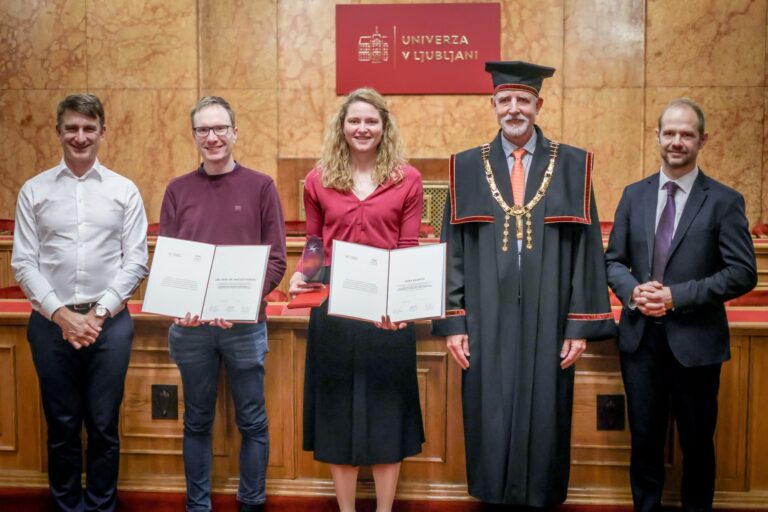
Sara Klopčič prejela nagrado dr. Uroša Seljaka za najboljši znanstveni članek
Na Univerzi v Ljubljani so 9. oktobra 2026 že petič podelili nagrade in pohvale dr. Uroša Seljaka za najboljše znanstvene članke študentk in študentov prve in druge stopnje študija v Sloveniji.
Med letošnjimi nagrajenci je tudi Sara Klopčič z Instituta »Jožef Stefan«, ki je nagrado prejela za znanstveni članek Electrically and Geometrically Tunable Photon Pair Entanglement from Ferroelectric Nematic Liquid Crystal (Električno in geometrijsko nastavljiva prepletenost parov fotonov iz feroelektričnega nematskega tekočega kristala).
Njen mentor, izr. prof. dr. Matjaž Humar z Odseka za fiziko trdne snovi Instituta »Jožef Stefan« in Fakultete za matematiko in fiziko Univerze v Ljubljani, je skupaj z nagrajenko prejel plaketo za mentorsko delo.
Nagrada dr. Uroša Seljaka spodbuja študentke in študente k znanstvenemu raziskovanju že med študijem ter poudarja pomen dobrega mentorstva pri doseganju izjemnih raziskovalnih rezultatov.
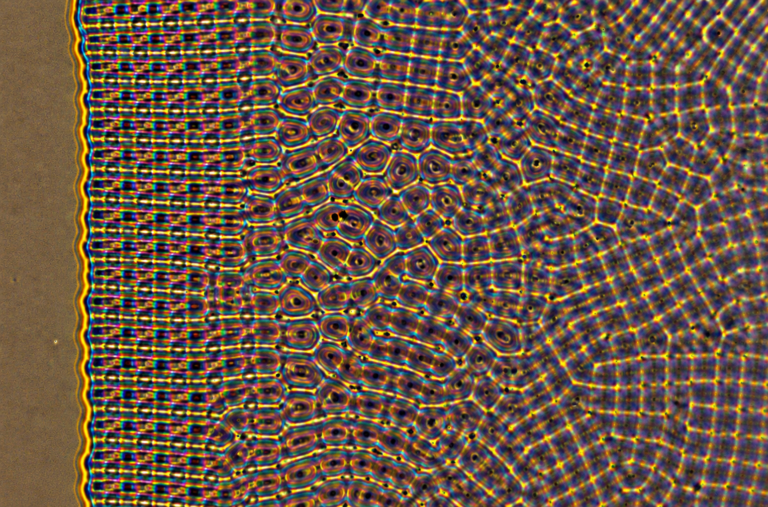
Article in Advanced Materials: Elasticity-Driven Periodic Polarization Patterns in a Chiral Ferroelectric Nematic Fluid
Marta Lavrič, in collaboration with a group from Department of Complex Matter F7 (A. Sterle, P. Medle Rupnik, L. Cmok, A. Erkoreka, N. Osterman, A. Mertelj, N. Sebastián) and research groups from University of Leeds (C. J. Gibb, J. Hobbs, R. J. Mandle) and University of the Basque Country (A. Erkoreka, J. Martinez-Perdiguero), has published an article entitled “Elasticity-Driven Periodic Polarization Patterns in a Chiral Ferroelectric Nematic Fluid” in Advanced Materials.
The interplay between chirality, confinement and elasticity can drive the spontaneous formation of complex polarization patterns in chiral ferroelectric nematic liquid crystals. These three factors work together to transform an initially uniform state into a variety of ordered structures.
In a new study the researchers show that when the pitch of the material under confinement deviates from its natural pitch, periodic instabilities emerge as the material approaches a heliconical polar state. Near such transition, the bend elastic constant of the liquid crystal softens. The combination of the material’s preferred helical structure, confinement and reduced resistance to bending drives the formation of periodic polarization patterns.
Under confinement, these instabilities give rise to a variety of self-organized structures, including stripes, squares and hexagonal patterns. By changing the thickness of the confined material and the surface alignment, the researchers can control which structures emerge.… Read the rest “Article in Advanced Materials: Elasticity-Driven Periodic Polarization Patterns in a Chiral Ferroelectric Nematic Fluid”